Homelessness affects thousands of young people every day in Canada. For many of them, homelessness is a cycle. They use services from many agencies and programs, often moving between different systems and supports.
When youth experiencing homelessness seek support, they are often asked to repeat their story and give the same personal information. This is because many service organizations and programs work independently of one another. This makes it hard for these service providers to follow a young person’s journey. It also makes it difficult to provide consistent, coordinated care.
Data collaboration can help address this challenge. Sharing the right information, in the right way, can support more informed referrals. This approach provides faster access to resources and reduces duplication of efforts. Data collaboration can also identify young people at risk earlier to strengthen prevention efforts.
PolicyWise for Children & Families is addressing this issue in two ways. First, our project team is studying patterns in the use of childhood services to better predict youth homelessness. Second, our team is designing and testing a simple data collaboration initiative.
Using these two approaches, we are looking to improve how services are coordinated for youth who are homeless or at risk of homelessness. They explore how collaborative data use can:
Strengthen policy and research
Coordinate approaches to youth homelessness prevention
We are basing this work on existing data, emerging practices, and real-world community experience. We are also engaging with community partners and youth. Our hope is that this work will help inform other youth homelessness prevention efforts across Canada.
Meaningful data collaboration takes time. Organizations come to this work with different goals, capabilities, and levels of readiness. There’s no single pathway, definitive answer, or standardized approach to this work.
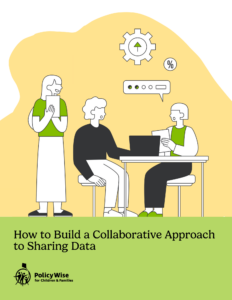
For this reason, we created this report. It provides five key considerations for building a collaborative approach to data sharing in the social sector.
The key considerations are:
Establishing Purpose and Intention
Identifying and Mitigating Risk
Promoting Client-Centred Design
Understanding and Navigating Capacity
Prioritizing Sustainability
How to Build a Collaborative Approach to Data Sharing
Youth experiencing homelessness often navigate multiple support systems, yet key data remains siloed by organizations and agencies. When governments, community organizations, and researchers cannot easily share and connect information, coordination suffers and prevention falls short.
In this webinar, we show how collaborative and linked data can support earlier identification and more coordinated action. Drawing on pilot projects in British Columbia and Calgary, we illustrate what collaboration looks like in practice and what communities can build now.
The pilots demonstrate how cross-system data use can strengthen policy, research, and coordinated service delivery for youth who are homeless or at risk. The webinar closes with clear, practical steps to start and sustain collaboration across systems.