A new report from PolicyWise offers a practical guide for organizations ready to share data and strengthen support for young people experiencing homelessness.
When data silos get in the way
When a young person experiencing homelessness seeks help, they often have to tell their story again and again. Each organization they turn to asks for the same information. Each system works on its own. The result is a cycle that is exhausting for youth and difficult for the people who serve them.
Data collaboration can help break that cycle. Sharing the right information, in the right way, can mean faster access to resources, better-coordinated care, and earlier identification of youth at risk. But getting there takes more than goodwill. It takes a clear, thoughtful approach.
Building youth homelessness data collaborations
This is exactly what the Building Youth Homelessness Data Collaboration project is working to address. Led by PolicyWise for Children & Families, this project explores how organizations and government programs can share data in ways that are safe, meaningful, and centred on the needs of youth.
It is grounded in real community experience and built through genuine engagement with partners and youth. The goal is to develop a practical, community-based approach that organizations and initiatives across Canada can learn from and build on.

How to build a collaborative approach to data sharing
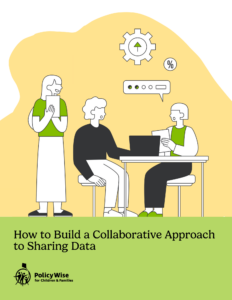
In January 2026, the project team released How to Build a Collaborative Approach to Data Sharing. The report starts from an honest place: there is no single, standardized pathway to data collaboration.
Organizations come to this work at different stages, with different goals, capabilities, and levels of readiness. The report respects that reality. Rather than prescribing one approach, it offers 5 considerations for data sharing to help organizations build collaborative practices that are right for their context.
Finding practical solutions for sharing data
This project identifies practical ways to share information that improves coordinated service access for youth who are homeless or at risk of homelessness. It is grounded in emerging practices and real community experience and is being developed with partners and youth. A pilot is being tested in Calgary, with the goal of informing prevention efforts nationwide.
The 5 Considerations for Data Sharing
The first consideration the report opens with is Establishing Purpose and Intention. This sets the foundation for the other four considerations to come. A shared, clearly articulated purpose shapes every decision that follows, from which data to share to how partners communicate when things get complicated.
From there, the report turns to Identifying and Mitigating Risk. Practitioners in this field know that data about vulnerable youth carries real weight. This consideration addresses how to name and plan for risks to privacy, safety, and trust before they become problems.
Promoting Client-Centred Design asks organizations to keep the people behind the data at the centre of every decision. For those working directly with youth, this consideration will feel familiar. It reinforces that data practices should reflect the lived experiences and voices of the young people they are meant to serve.
Understanding and Navigating Capacity gets practical. Collaborations rarely start with equal footing. Partners bring different resources, technical abilities, and organizational constraints to the table. This consideration encourages honest conversations about what each partner can realistically contribute and sustain.
The final consideration, Prioritizing Sustainability, looks beyond the launch. Building something that works in the short term but cannot be maintained is a risk that organizations working with limited resources understand well. This consideration focuses on the relationships, systems, and resources needed to keep collaboration going over time.
What Comes Next
This article is the first in a series. Over the coming weeks, each of the 5 considerations for data sharing will be explored in its own dedicated story. We will be going deeper into what each consideration means, why it matters, and what it can look like in practice.
Whether you work directly with youth experiencing homelessness, lead a data or policy team in a non-profit, or support data governance in a government ministry or agency, this series is for you.
Read or download the How to Build a Collaborative Approach to Data Sharing report and follow this series for a closer look at each of the 5 considerations for data sharing.
You can also explore the full Building Youth Homelessness Data Collaboration project and browse related resources found on our Data Roadmap for Preventing Youth Homelessness project page.
Project partners
PolicyWise for Children & Families is proud to be collaborating with The Alex and the Trellis Society on this project.


Project funding
This project was funded in part by the Government of Canada and the Government of British Columbia.